A few years ago, personal AI assistants felt like a fun extra.
Today, they feel more like quiet partners helping us get through the day.
From setting reminders to answering random questions at midnight, AI assistants have slowly slipped into our daily routines. And honestly, most of us didn’t even notice when they became essential.
From Simple Commands to Smart Help
Early assistants could barely understand what we were saying.
You had to speak slowly and hope for the best.
Now, tools like Siri, Alexa, and Google Assistant can hold real conversations, understand context, and even predict what you might need next.
It’s less about commands now and more about natural interaction.
AI That Feels Personal
What makes modern AI assistants special is how personal they feel.
They learn your habits, your preferences, and even your tone.
Whether it’s suggesting the best time to leave for work or reminding you to drink water, the help feels tailored. Not perfect—but close enough to feel useful.
That personal touch is why people are trusting AI more than ever.
Beyond Phones and Speakers
Personal AI assistants aren’t limited to phones anymore.
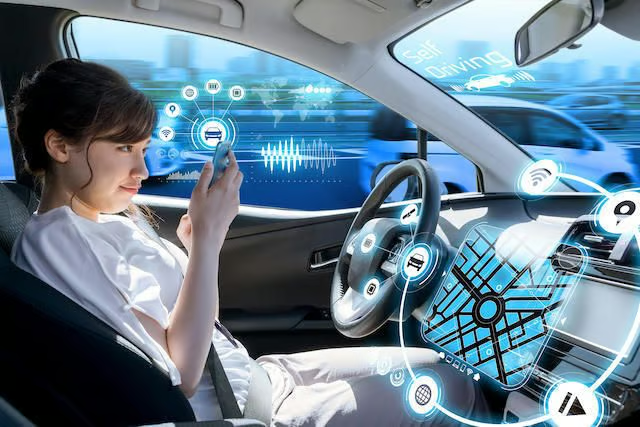
They’re showing up in cars, smart homes, laptops, and even wearable devices.
You can start a task on one device and finish it on another without thinking twice. That smooth experience makes technology feel less like a tool and more like support.
And that’s a big shift.
AI at Work and Study
AI assistants are also changing how we work and learn.
They help draft emails, summarize meetings, organize tasks, and explain tough topics.
Tools like ChatGPT are becoming everyday companions for writers, students, and professionals. Not to replace thinking—but to speed things up.
It’s like having a smart helper who never gets tired.
The Trust Factor
As AI becomes more involved in our lives, trust matters more.
People want assistants that respect privacy and don’t overstep.
Companies are starting to focus more on transparency and control, letting users decide how much data they share. That trust will shape how far personal AI can really go.
Without it, progress slows.
What the Future Looks Like
Personal AI assistants are only getting better.
They’ll become more proactive, more understanding, and more human-like in how they help.